01
The temperature stops moving
At sixty metres, the water stays between eleven and thirteen degrees all year round. No cellar holds that steady — ours still breathes with the seasons.
 My account
Every year, part of our vintage Premier Cru leaves the chalk of Vertus for the Bay of Stiff, off the island of Ouessant. A year at sixty metres down, in darkness and silence. The bottle comes back covered in barnacles; as for the champagne, the magic of the sea has worked on it, bringing it a touch of youth while preserving its aromas of age.
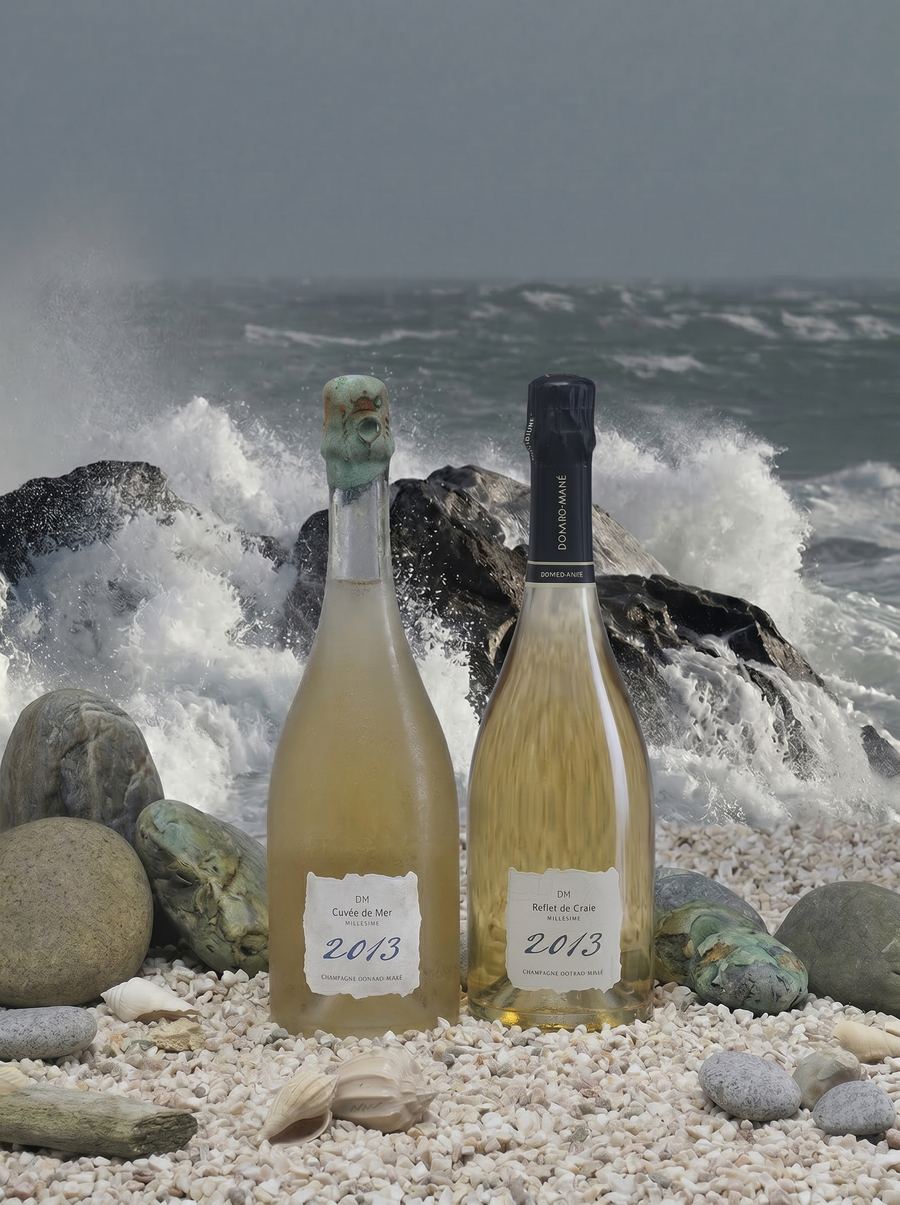
A cellar dug into chalk is ideal, but a stay on the ocean floor gives the champagne strange and surprising aromatic notes on tasting, for four essential reasons:
At sixty metres, the water stays between eleven and thirteen degrees all year round. No cellar holds that steady — ours still breathes with the seasons.
A champagne bottle holds close to six bars. At sixty metres, the sea pushes back with just as much on the other side of the glass. The cork stops working, and exchange with the outside all but ceases.
The darkness is total. Light is what tires a white wine and gives it what tasters call lightstrike; down there, there is none.
No passing lorry, no motor, no electromagnetic field. The wine rests in a stillness that even a deep cellar never quite achieves.
You can read the result in the glass: slower oxidative evolution, freshness held longer, and a more saline nose than the same wine left behind in Vertus.
We do not submerge a separate cuvée. We take one and the same champagne, disgorged on the same day, and divide the bottles in two: some go down off Ouessant, the others continue their ageing in our cellars. The two bottles then meet again in the same case. It is the only honest way to show what the sea does — and what it does not.
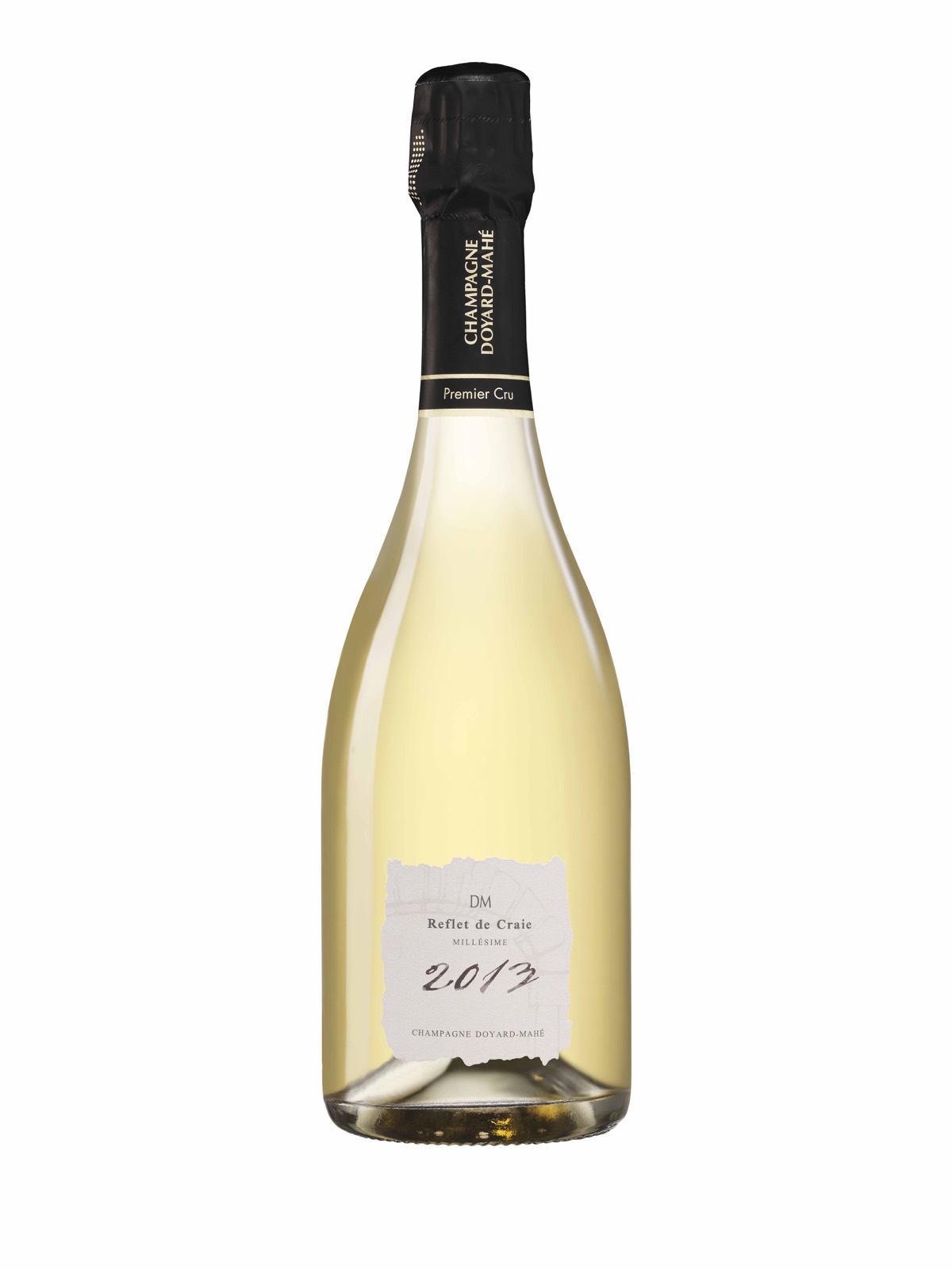
The same champagne, kept in our Vertus cellars at twelve degrees after disgorgement. No contact with the sea. Deep straw-gold, a nose of candied grapefruit, linden and wet chalk, a taut palate and a long finish.
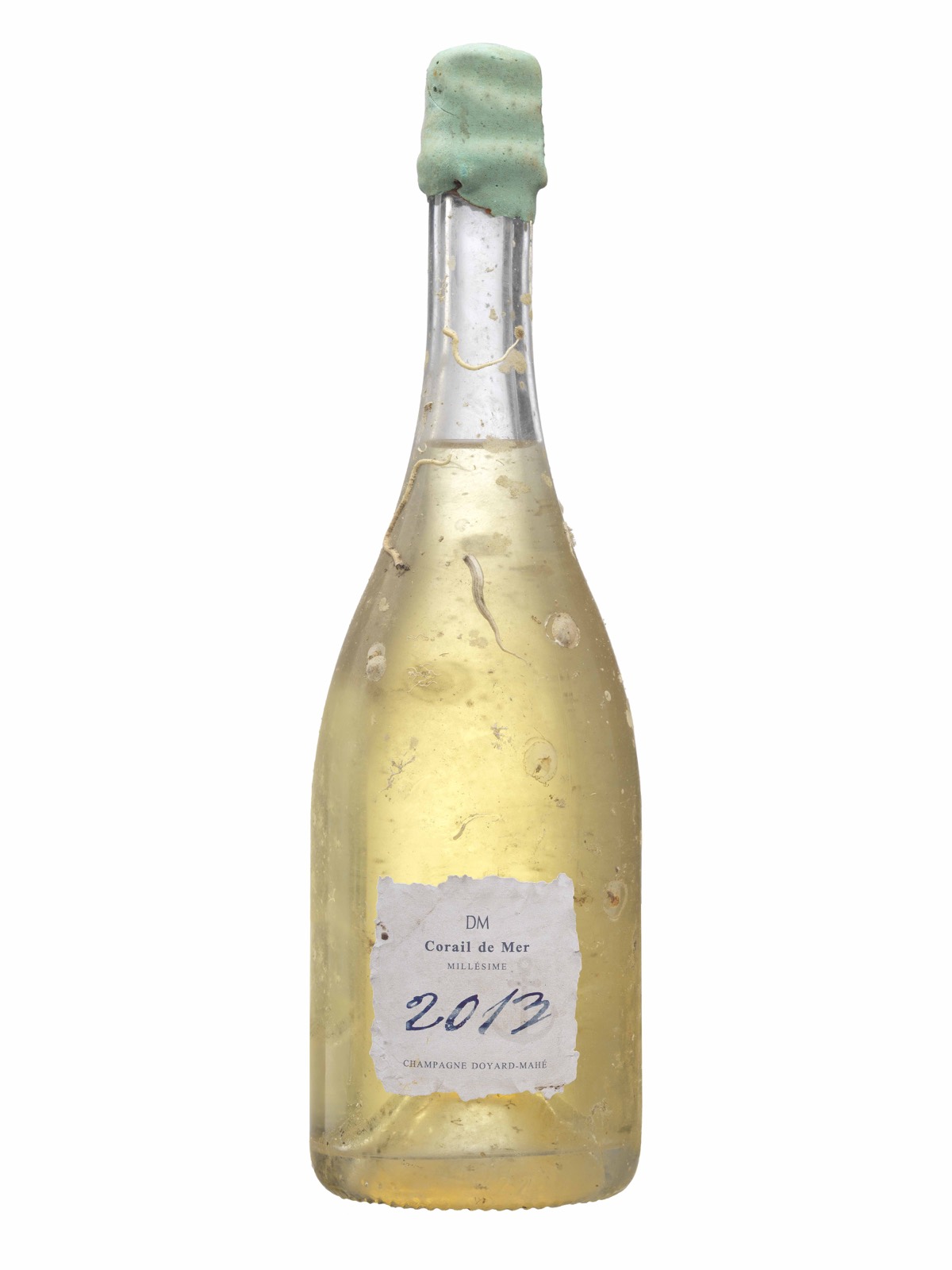
Same champagne, same disgorgement, cork sealed with wax before the descent. A saltier, more iodine nose, frankly marine. Greater chalky concentration, more polished fruit, less oxidative evolution — the freshness holds over time.
Ouessant closes the western tip of Brittany. The Bay of Stiff offers a cold, stable bed sheltered from the open swell. The cages go down to sixty metres — beyond the usual limits of recreational diving, which means nobody visits the bottles during the year they sleep.
What the sea leaves on them is not decoration. Barnacles — Balanus crenatus — and calcareous polyps fix themselves to the glass and the wax. Every bottle comes up with its own sea chart, and no two are alike. We clean them just enough to read the label.
There is a loop in all this. The chalk of Vertus is a Cretaceous seabed, made of belemnite shells that fell there a hundred million years ago. The wine it gives goes back under water for a year. It is chalk returned to the ocean it came from.
Serve Corail de Mer cold, with the seafood that suits it: fine de claire oysters, scallop carpaccio with oyster leaf, sea bream tartare, langoustines à la nage, citrus prawn ceviche, prawn ravioli. Extra-brut dosage, one hundred per cent chardonnay, Vertus Premier Cru — the vintage does not change terroir, only cellar.
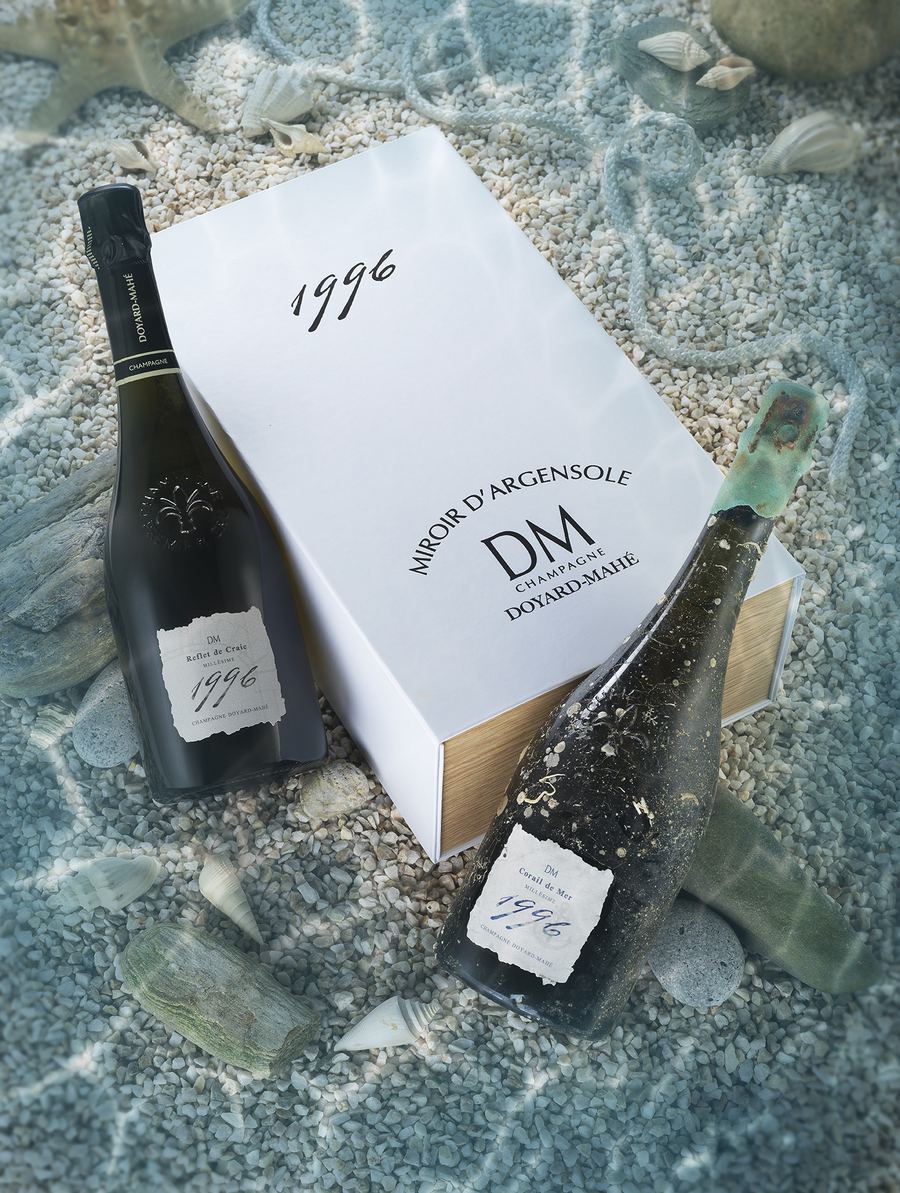
The duo in its signature case: the land cuvée and its ocean twin, side by side. Each case carries its vintage. Quantities are limited.
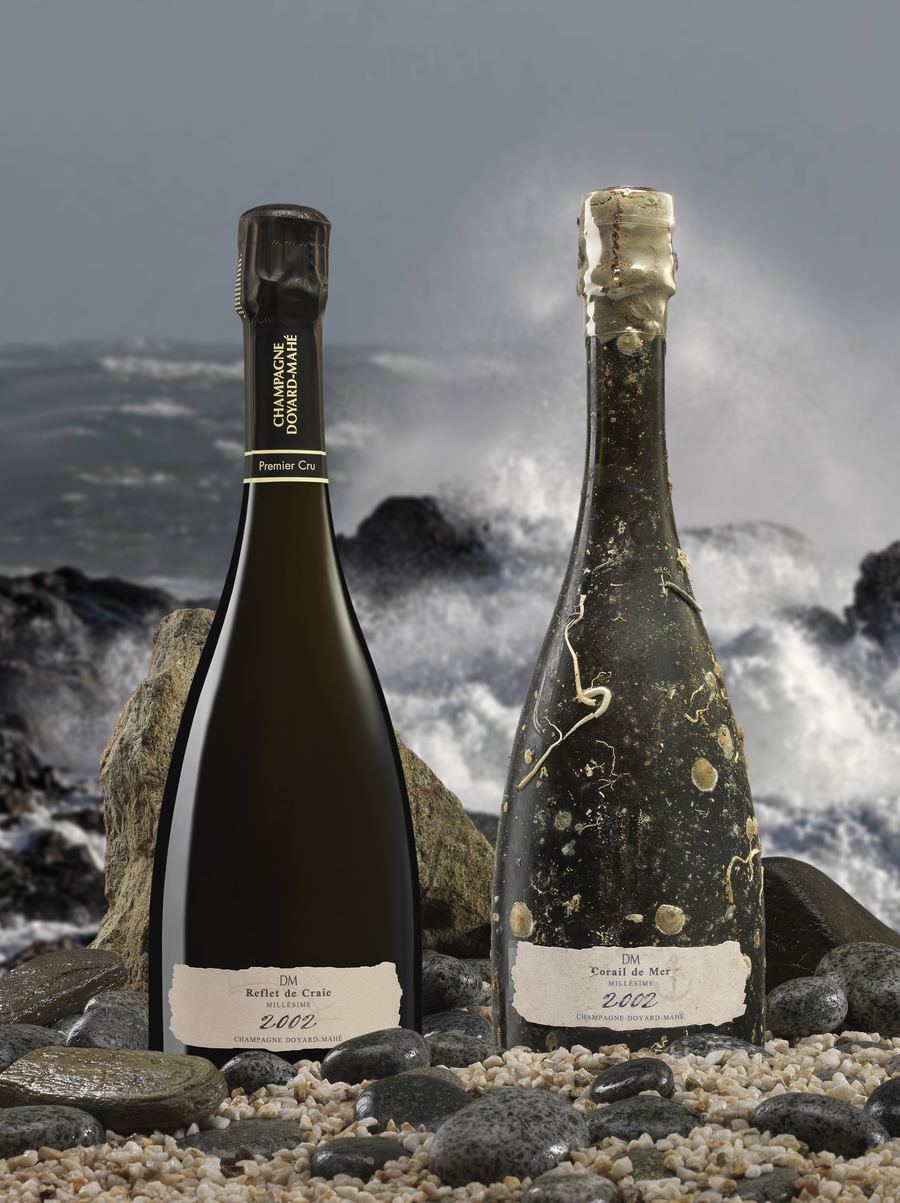
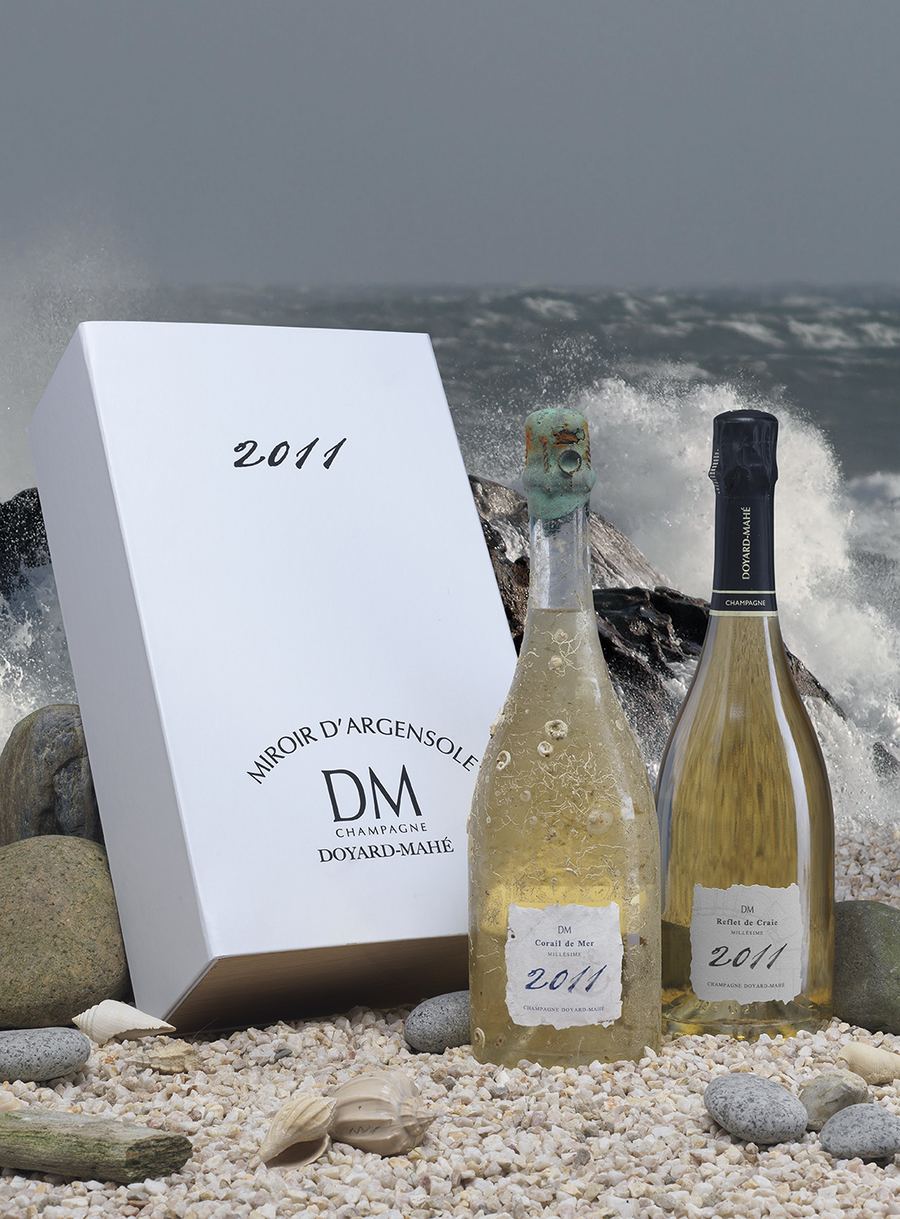
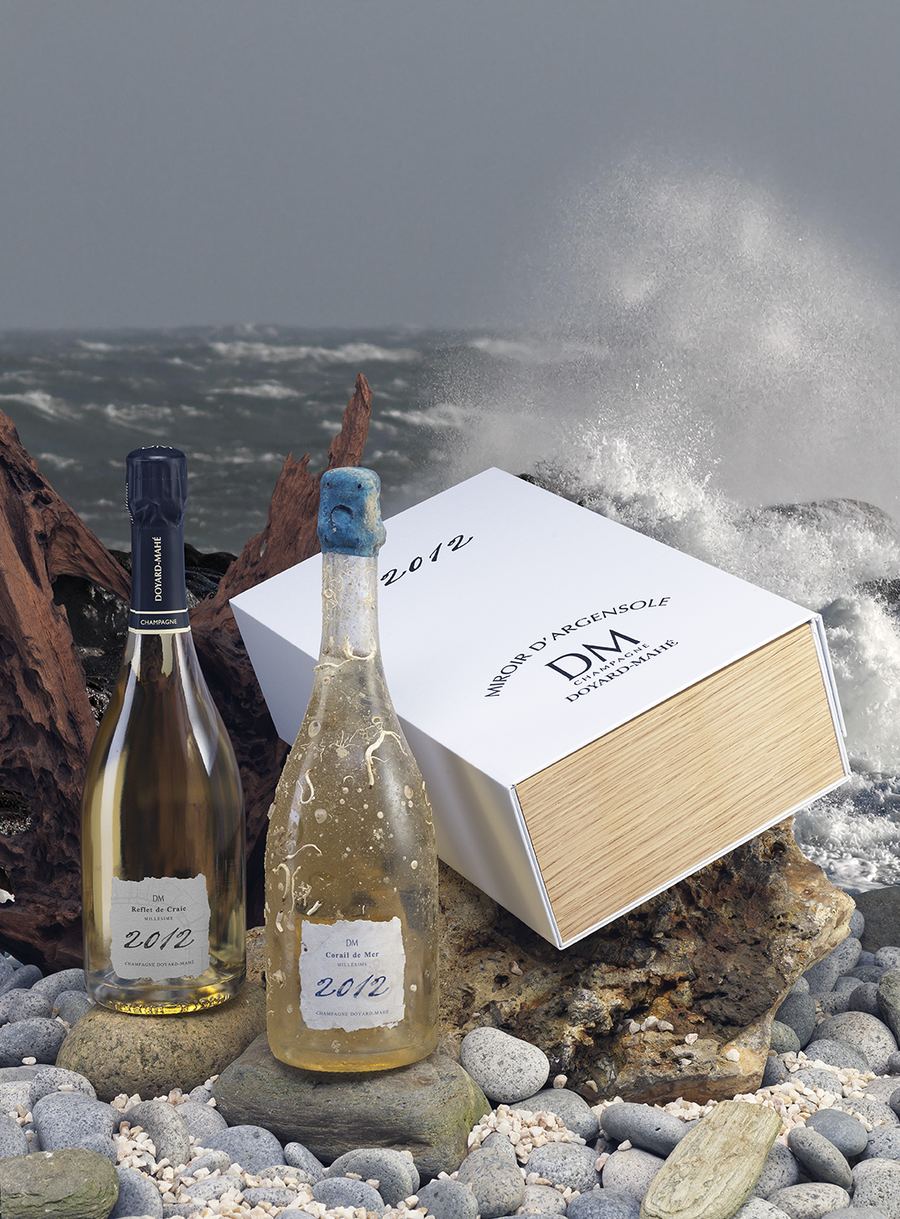
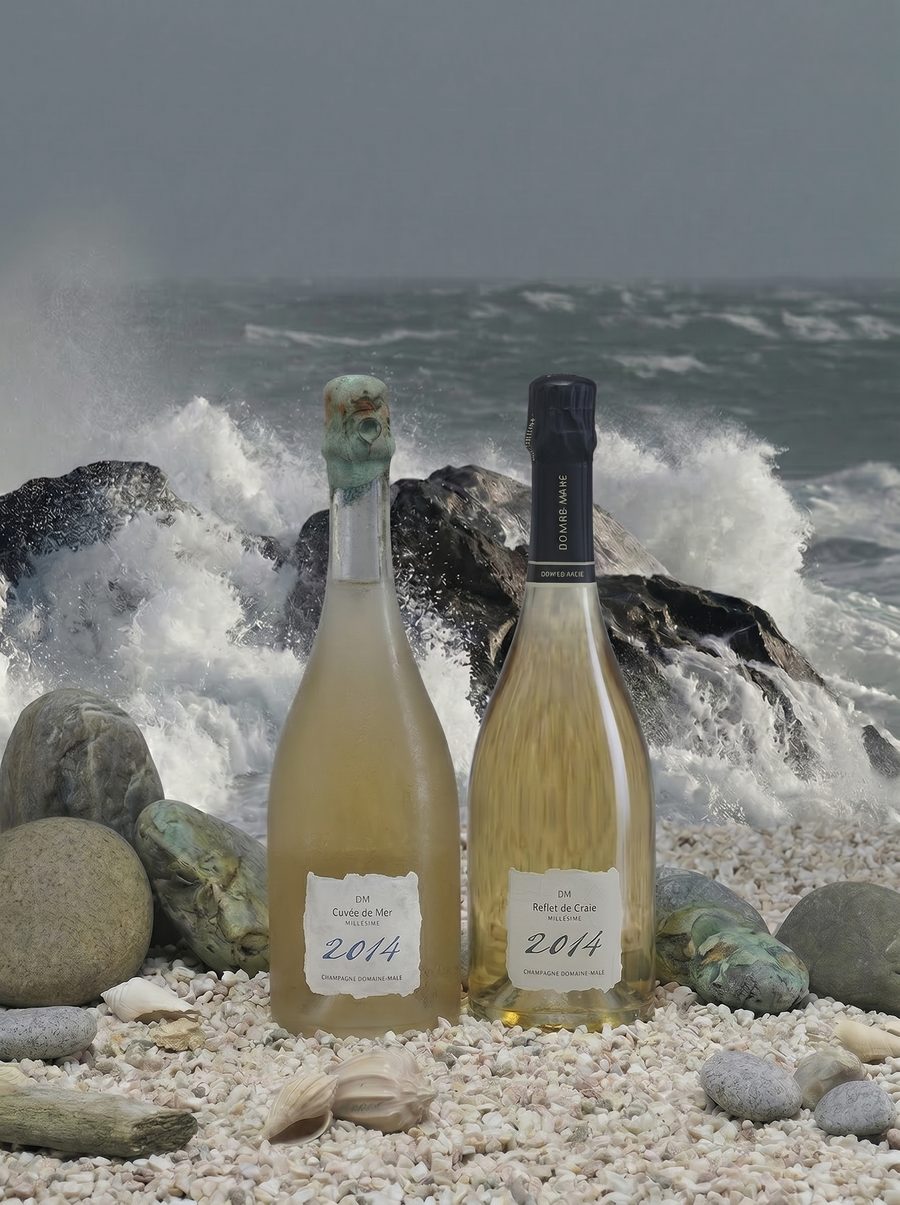
For four conditions no cellar brings together: a temperature that no longer varies (11-13 °C year-round), six bars of outside pressure balancing the bottle's own, total darkness and a complete absence of vibration. The wine evolves more slowly and keeps its freshness longer.
Sixty metres down, in the Bay of Stiff, off the island of Ouessant. That is beyond the usual limits of recreational diving: the cages are lowered and raised, and nobody goes down to see them in between.
One year. The bottles go down and come back twelve months later, the cork sealed with wax before the descent.
Yes, and we prove it by keeping part of the bottles from the same disgorgement in our cellars. Side by side, Corail de Mer shows a saltier, more iodine nose, a more marked chalky concentration, more polished fruit and less oxidative evolution than Reflet de Craie — which is the very same wine.
Barnacles (Balanus crenatus) and calcareous polyps, fixed to the glass during the year spent on the seabed. We leave them in place: they are the record of the immersion, and every bottle carries its own.
At the estate in Vertus by appointment, and through our partner wine merchants and importers in France and abroad. The Miroir d'Argensole cases are made in very small numbers, vintage by vintage.
A tasting at the estate is the only place where both bottles can be poured side by side, seconds apart.
 Drinking alcohol during pregnancy, even in small amounts, can seriously harm the health of the child. Alcohol abuse is dangerous for your health. Please drink responsibly.